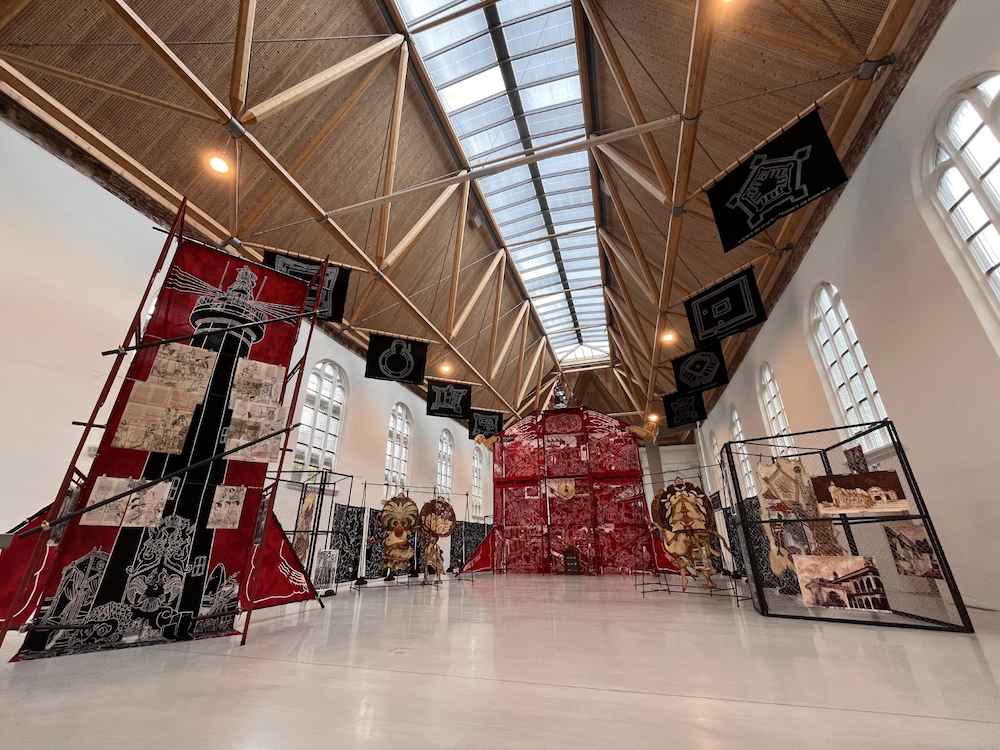
The Asian Art Biennial is pleased to announce the full lineup of participating artists for its 10th edition, which will run from 7 November 2026 to 28 February 2027 at the National Taiwan Museum of Fine Arts (NTMoFA).
Bringing together 30 artists and artist groups from Asia and beyond, the exhibition features weaving, sculpture, embroidery, painting, documentation, video, and large-scale indoor and outdoor installations. It also engages with themes such as community participation, transnational art networks, and co-learning platforms.
Curator LU Pei-Yi, a professor at National Taipei University of Education, proposed the exhibition title “Mrahul Tminun · 共織 · Co-Weaving,” which is presented in Truku, Chinese, and English. Taking “curating as a form of weaving” as its methodology, the exhibition views Asia as a deeply interconnected relational field that is still grappling with multiple colonial histories. This perspective is echoed in the participants themselves: the life trajectories of many artists and co-creators span several countries and regions, and their diverse identities reflect the movement and connections of contemporary communities across cultures.
Through three dimensions — “Weaving as Method,” “Artists as Weavers,” and “Weaving People Together” — the exhibition centers on community, mutual aid, and sharing, and fosters new epistemologies through women’s, Indigenous, and queer perspectives. This edition brings together creators from a wide range of national backgrounds, highlights women and communities, and presents collaborative structures ranging from collectives to pairs. With family members, spouses, and community support networks taking part, the artists create works that place genuine connection and “relations” at the core. As a result, this edition prioritizes the sustainability of artistic practice over the number of newly commissioned works that traditional biennials tend to emphasize.
Another hallmark of this Biennial is “Co-Learning,” a series of cross-disciplinary public programs that turns the exhibition into a “Woven Knowledge” platform. The programs begin with community-based working sessions and workshops. The opening week features forums and performances that encourage critical thinking, and throughout the exhibition, embroidery workshops, board games, and conversation sessions will be on offer. By inviting audiences to listen, make, play, and learn together, the exhibition grows alongside the public and brings the spirit of co-weaving to life.
Highlights include:
Labay EYONG: Trained in architecture, Taiwanese Truku Indigenous artist Labay EYONG uses weaving to address Indigenous communities and land development. In works such as Weaving the Mountain and Dreaming Red Earth, she draws on collaborative weaving and post-earthquake stitching to map environmental traces and collective memories.
GEGERBOYO: Their work Holopis Kuntul Baris explores the Indonesian concept of “gotong royong” (collective labour based on solidarity) and examines how wartime mobilization turned communal cooperation into a tool of discipline. The installation is a space where nationalism, memory, and trauma intersect.
Helen GRACE & Phaptawan SUWANNAKUDT: Sydney-based interdisciplinary filmmaker Helen GRACE and Thai-born, Sydney-based mural artist Phaptawan SUWANNAKUDT present the installation Until We Meet Again. A product of transnational collaboration, the work captures changing gender roles and decades of accumulated memory.
Aluaiy KAUMAKAN: A Paiwan Indigenous artist from the Paridrayan community in Pingtung, Taiwan, Aluaiy KAUMAKAN combines traditional weaving with large-scale soft sculpture in her Rubbing series. Since her community was relocated after Typhoon Morakot, she has led local women in long-term creative practice, extending the touch of the individual body into a collective act of returning to the land.
Meita MEILITA: Drawing on history and her lived experience as a woman and mother, Indonesian artist Meita MEILITA presents Wanai Saiji: The Shape of Being, created during her 2025 residency in Hualien, Taiwan, alongside new works. The pieces set machine-embroidered bureaucratic archives against hand-embroidered Kavalan banana fibre.
Womanifesto: Centred on hospitality and collective generosity through biannual gatherings, residencies, and workshops, this independent art collective connects women artists across Asia. Its project SAAN SENSE brings together Isaan collectives to collaborate with farming communities, exchanging new locally woven hammocks for used ones to explore local narratives of weaving and daily life.
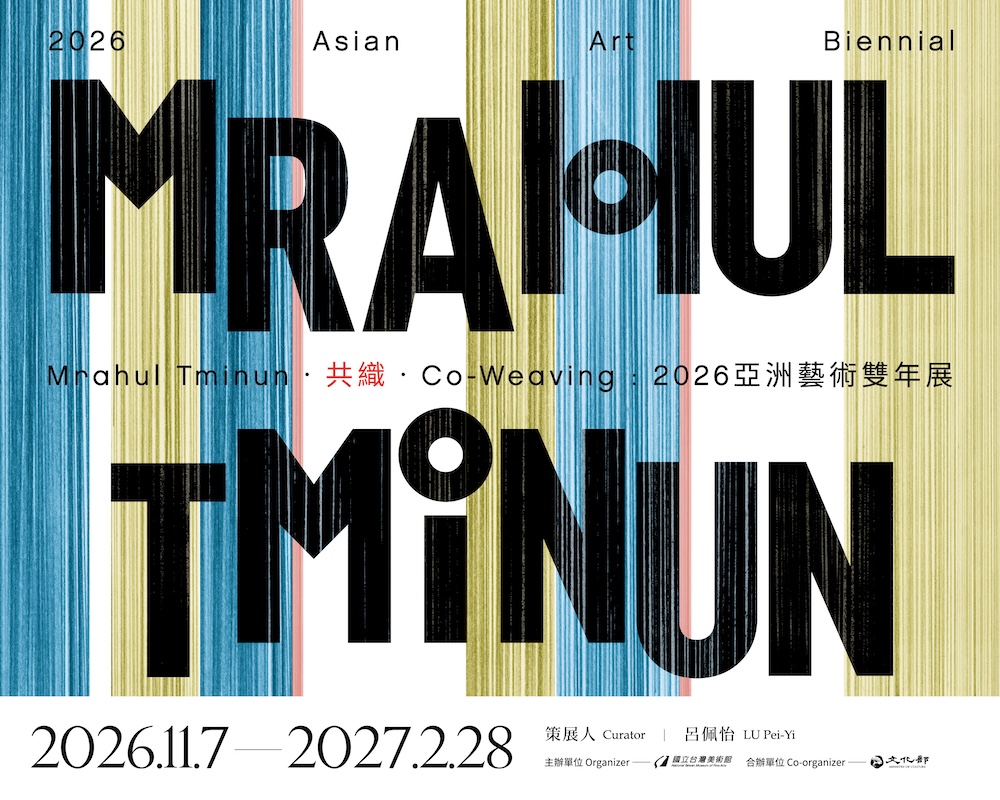
10th Asian Art Biennial
Mrahul Tminun · 共織 · Co-Weaving
- Exhibition Period: 2026.11.7 – 2027.2.28
- Exhibition Venue: National Taiwan Museum of Fine Arts (NTMoFA)
- Curators: LU Pei-Yi
- Participating Artists: Irwan AHMETT & Tita SALINA, Busui AJAW, Mounira AL SOLH, CHANG En-Man, Sheba CHHACHHI & Janet PRICE, Culture Ferment Studio (HUANG Po-Chih, HUANG Chien-Yu, HUANG Wei-Xi, HUANG Zhe-Xi), DAVRA Collective, Cian DAYRIT, Labay EYONG, GEGERBOYO, Helen GRACE & Phaptawan SUWANNAKUDT, Speedy Grandma, GUDSKUL, HomoPleasure Collective, HOU I-Ting, Hylozoic/Desires (Himali Singh SOIN & David Soin TAPPESER), Inter-Asia Woodcut Mapping, Aziza KADYRI, Aluaiy KAUMAKAN, KUO Yu-Ping, LEE Kai Chung & SHEN Jun, Eleng LULUAN, Meita MEILITA, Haji OH, Open Contemporary Art Center (OCAC), Pallavi PAUL, Citra SASMITA, Womanifesto, Yamanaka Suplex, YEE I-Lann
- Co-Learning Programs:
- Co-Learning the Southern Linguistics through Songs and Translation
- Intimate Commons
- The Meandering Games
- Sewing Lives: Stories of Malaysia Garment Factory Women in the 1970s
- Weaving the Commons: Art Archives, Materiality, and the Labour of Keeping
- Weaving Invisible Threads
- Zero Experience — Learning from Plants: Tree Tree Tree Person × Datong Community Co-Learning Intensive


